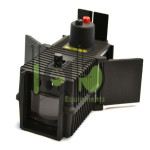
Hydroelectric Power Generation Model

Hydroelectric Power Generation Model

Product Code : SCL-PMP-11341

The hydroelectric power generation model is a renewable energy educational model used for demonstrating how flowing water can rotate a turbine and explain the basic conversion of water energy into mechanical or electrical energy. It is designed for schools, colleges, STEM labs, physics laboratories, environmental science classrooms, and engineering training programs.

Product Description

The Hydroelectric Power Generation Model by Lab Equipments Ambala is a practical teaching model for explaining hydro power, turbine motion, water energy conversion, generator principles, and renewable electricity generation. It helps students observe how water flow can drive a turbine, making abstract hydroelectric power concepts easier to understand through hands-on classroom demonstration.

This model is suitable for supervised science lessons, STEM activities, renewable energy demonstrations, and introductory engineering practicals. It supports concept-based learning for water flow, rotational motion, energy transfer, and power generation. Exact material, turbine type, electrical output, dimensions, weight, and included accessories should be confirmed from the final product datasheet before publication or procurement.

Key Features

  • Demonstrates hydroelectric power generation using water-driven turbine motion.
  • Supports hands-on learning of renewable energy, water energy conversion, and generator basics.
  • Useful for physics, environmental science, engineering fundamentals, and STEM education.
  • Helps students observe the relationship between water flow and turbine rotation.
  • Suitable for teacher-led demonstrations, student projects, and science exhibition displays.
  • Explains practical clean-energy concepts without requiring a full-scale hydro plant setup.
  • Designed for schools, colleges, polytechnic institutes, and technical training laboratories.

Technical Specifications

Specification

Detail

Product name

Hydroelectric Power Generation Model

Also listed as

Hydro Power Model

Brand

Lab Equipments Ambala

Product category

Renewable Energy Model / Physics Demonstration Model / STEM Educational Model

Primary keyword

hydroelectric power generation model

Secondary keywords

hydro power model, hydroelectric model for school, water turbine model, renewable energy model, turbine generator model, STEM energy model, physics demonstration model, water energy conversion model

Intended users

Schools, colleges, STEM labs, physics teachers, environmental science programs, engineering training institutes, and student project groups

Demonstration capacity

Classroom demonstration capacity; output rating to be confirmed

What's Included in the Kit

  • Hydroelectric power generation model main assembly
  • Water turbine or runner assembly
  • Generator, motor, or output demonstration unit
  • Water reservoir, channel, or flow arrangement
  • Connecting wires or terminals
  • LED, lamp, meter, or load indicator
  • Mounting base or display frame
  • User manual or experiment guide

Applications / Uses

  • Demonstrating hydroelectric power generation in physics and science laboratories.
  • Teaching renewable energy conversion in environmental science classes.
  • Explaining how flowing water can rotate a turbine.
  • Introducing generator principles and mechanical-to-electrical energy conversion.
  • Supporting STEM projects on clean energy, water power, and sustainable technology.
  • Using as a working display model for science fairs and classroom exhibitions.
  • Helping engineering students understand the basic layout of a hydro power system.

How to Use the Hydroelectric Power Generation Model

  1. Place the hydroelectric power generation model on a stable, water-safe demonstration bench.
  2. Check that the turbine, channel, wires, and output indicator are correctly positioned.
  3. Add water only to the approved reservoir or flow section described in the manual.
  4. Allow controlled water flow to reach the turbine blades or runner.
  5. Observe the turbine rotation and note how water flow produces mechanical motion.
  6. If the model includes an output indicator, observe the LED, lamp, meter, or connected load.
  7. Discuss how water flow rate, turbine design, friction, and load affect the demonstration output.

Use the model only under teacher or instructor supervision. Keep electrical terminals dry unless the manual specifies a protected connection, do not overfill the water section, and do not connect unapproved external power sources.

Care & Maintenance

  • Drain water fully after each demonstration to prevent leakage, corrosion, or residue buildup.
  • Wipe the model with a soft, dry cloth before storage.
  • Store the model in a dry cabinet away from dust, moisture, and direct impact.
  • Inspect the turbine, wires, joints, and output indicator before every classroom use.

Why Choose Lab Equipments Ambala

Lab Equipments Ambala manufactures and supplies scientific laboratory instruments, educational lab equipment, didactic models, science kits, mathematics kits, and STEM learning products. The company serves schools, colleges, laboratories, training institutes, distributors, and export buyers from Ambala, India. Its product range includes physics lab equipment, electrical and electronics products, laboratory instruments, NCERT kits, and educational science models. Buyers should request the final technical datasheet, packing list, warranty terms, and compliance documents before bulk orders, tenders, or institutional procurement.

Explore related categories such as educational laboratory equipmentphysics lab equipmentelectrical and electronics lab equipment, and windmill model for renewable energy demonstration.

Frequently Asked Questions

What is a hydroelectric power generation model used for?

A hydroelectric power generation model is used to demonstrate how flowing water can rotate a turbine and explain the basic conversion of water energy into mechanical or electrical energy.

How does a hydroelectric power generation model work?

The model works by directing water flow toward a turbine or runner. The moving water rotates the turbine, and the rotation can be used to explain how hydroelectric systems generate power.

Is this model suitable for school science labs?

Yes, the model is suitable for school science labs, STEM classrooms, colleges, and teacher-led demonstrations. It should be used under supervision, especially when water and electrical indicators are involved.

Does the model generate electricity?

The product is intended to demonstrate hydro power generation, but the exact output function must be confirmed. Check whether the supplied model includes a generator, LED, lamp, meter, or other output indicator.

What concepts can students learn from this model?

Students can learn water energy conversion, turbine motion, rotational energy, generator basics, renewable electricity, and the role of flow rate in hydroelectric power generation.

What components are included with the Hydro Power Model?

The exact packing list should be confirmed from Lab Equipments Ambala. A reviewer should verify the turbine, water flow arrangement, generator or motor, output indicator, base, wires, and manual before publishing final specifications.

For more renewable energy and physics teaching models, visit the physics lab equipment category by Lab Equipments Ambala.

Suggested image ALT text: Hydroelectric power generation model for classroom water turbine and renewable energy demonstration by Lab Equipments Ambala.

   
Supply of Hydroelectric Power Generation Model from to Finland, France, Tanzania, Thailand, Sri Lanka, Congo, Costa Rica, Ivory Coast, Croatia, Cuba, Cyprus, Czech Republic, Denmark, Djibouti, Dominica, Afghanistan, Albania, Algeria, Andorra, Angola, Antigua and Barbuda, Argentina, Armenia, Australia, Austria, Azerbaijan, Bahamas, Bahrain, Bangladesh, Barbados, United Arab Emirates (UAE, Dubai), United Kingdom (London), United States, Uruguay, Uzbekistan, Vanuatu, Belarus, Belgium, Belize, Benin, Bhutan, Bolivia, Bosnia and Herzegovina, Botswana, Brazil, Brunei, Bulgaria, Burkina Faso, Burma Myanmar, East Timor, Ecuador, Egypt, El Salvador, Equatorial Guinea, Eritrea, Estonia, Ethiopia (Addis Ababa), Fiji, Burundi, Cambodia, Cameroon, Canada, Cape Verde, Central African Republic, Chad, Chile, Colombia. Math Teaching Kit suppliers in Luxembourg, Macedonia, Madagascar, Malawi (Lilongwe), Malaysia (Kuala Lumpur), Maldives, Mali, Malta, Marshall Islands, Mauritania, Mexico, Micronesia, Moldova, Monaco, Mongolia, Montenegro, Morocco, Mozambique, Namibia, Comoros, Congo. Math Teaching Kit manufacturers in Dominican Republic, Gabon, Gambia, Georgia, Germany, Ghana, Greece, Grenada, Guatemala, Guinea, Guinea-Bissau, Guyana, Haiti, Honduras, Hungary, Iceland, Indonesia, Iran, Iraq, Niger, Nigeria (Abuja), Norway, Oman, Palau, Panama, Papua New Guinea, Paraguay, Peru, Philippines (Manila), Poland, Ireland, Israel, Italy, Jamaica, Japan, Jordan, Kazakhstan, Kenya (Nairobi), Kiribati, Korea, Kuwait, Kyrgyzstan, Laos, Latvia, Lebanon, Lesotho, Liberia, Liechtenstein, Lithuania, Mauritius, Nauru, Nepal, Netherlands, New Zealand, Nicaragua, Portugal, Qatar, Romania, Russia, Rwanda (Kigali). Math Teaching Kit exportets to Saint Kitts and Nevis, Saint Lucia, Saint Vincent and the Grenadines, Samoa, San Marino, Sao Tome and Principe, Saudi Arabia, Senegal, Serbia, Seychelles, Sierra Leone, Singapore, Slovakia, Slovenia, Solomon Islands, Somalia, South Africa, South Sudan, Spain, Sudan, Suriname, Swaziland, Sweden, Switzerland, Syria, Tajikistan, Togo, Tonga, Trinidad and Tobago, Tunisia, Turkey, Turkmenistan, Tuvalu, Uganda (Kampala), Ukraine, Venezuela, Vietnam, Yemen , Zambia (Lusaka), Zimbabwe

Office Address

Works: Block-10 Naraingarh Chowk Crossing, Baldev Nagar,
Ambala, Haryana 134003,

[email protected]

Follow Us