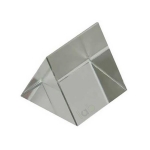
Adjustable Mirror Angle Model
Product Code : SCL-LAO-11271
The Adjustable Mirror Angle Model is an educational optics apparatus used for changing and observing the angular position of a mirror during reflection experiments. It is designed for students, physics teachers, school laboratories, colleges and STEM classrooms that require a clear, hands-on method for studying mirror orientation, reflected-ray direction and the laws of reflection.
Product Description
The Adjustable Mirror Angle Model holds a reflective surface in a position that can be changed for controlled classroom observations. When the mirror angle changes, the direction of the reflected light ray also changes. Students can use this relationship to connect mirror rotation with incident rays, reflected rays, surface normals and measured reflection angles.
The apparatus is suitable for teacher demonstrations and supervised student investigations. Its exact mirror material, angular range, scale resolution, locking mechanism, base construction and compatibility with ray boxes or optical benches must be confirmed from the current production specification. No unverified accuracy or material claim should be added to the published page.
Key Features
- Adjustable mirror position: Allows the reflective surface to be set at different angles for comparative experiments.
- Visible ray-direction changes: Helps students observe how mirror orientation affects the reflected light path.
- Law-of-reflection learning: Supports identification and measurement of incident and reflected angles.
- Controlled demonstrations: Enables users to change one variable while maintaining a consistent experimental arrangement.
- Reusable teaching apparatus: Suitable for repeated physics practicals, demonstrations and STEM activities.
- Simple classroom operation: Can be positioned and adjusted without complex experimental preparation.
- Broad optics relevance: Supports lessons on plane mirrors, ray tracing, image direction and angular displacement.
Technical Specifications
|
Specification |
Detail |
|
Product name |
Adjustable Mirror Angle Model |
|
Brand |
Lab Equipments Ambala |
|
Product category |
Light and Optics Teaching Apparatus / Reflection Demonstration Model |
|
Demonstration capacity |
One adjustable mirror position; exact configuration |
|
Scientific principle |
Reflection of light and angular control of a reflective surface |
What's Included in the Kit
- One adjustable mirror unit
- Mirror plate or reflective surface
- Angular scale or reference markings
- Adjustment knob, pivot or locking mechanism
- Base, frame or mounting support
- Light source or ray box: not confirmed
- Instruction sheet or experiment guide
Applications and Uses
- Demonstrating how mirror rotation changes reflected-ray direction.
- Verifying that the angle of incidence equals the angle of reflection.
- Identifying the incident ray, reflected ray, normal and point of incidence.
- Tracing light paths at different mirror orientations.
- Investigating angular displacement in plane-mirror experiments.
- Comparing calculated ray directions with observed results.
- Supporting school practicals, STEM activities and science exhibitions.
Related teaching apparatus includes the Reflection of Light Apparatus, the complete Light and Optics equipment range, the broader Physics Laboratory Equipment category and the Laser Ray Optics Kit.
How to Use the Adjustable Mirror Angle Model
- Place the model on a stable, level laboratory surface.
- Set the mirror at the required starting angle using the adjustment mechanism.
- Position a suitable ray box or low-intensity light source so that one narrow ray reaches the mirror.
- Mark or identify the point where the incident ray meets the reflective surface.
- Draw or locate the normal perpendicular to the mirror at the point of incidence.
- Observe and trace the reflected ray.
- Measure the incident and reflected angles from the normal.
- Change the mirror angle and repeat the observation for comparison.
Safety note: Do not direct laser beams or intense light toward the eyes. Secure the mirror before each observation and handle glass components by their edges under teacher supervision.
Care & Maintenance
- Clean the mirror with a soft, lint-free cloth suitable for the confirmed reflective material.
- Do not overtighten adjustment knobs or force the mirror beyond its specified range.
- Keep the angular scale and pivot free from dust and loose particles.
- Store the model in dry protective packaging to prevent scratching, impact and misalignment.
Why Choose Lab Equipments Ambala
Lab Equipments Ambala manufactures and supplies scientific instruments, physics experiment apparatus, educational models and teaching kits from Ambala, India. Its published range includes reflection apparatus, mirrors, ray-optics kits and other light-and-optics equipment for schools, colleges, universities and institutional laboratories. The company also supplies educational laboratory products to international buyers. Purchasers should request the current drawing, adjustment range, mirror specification, inspection criteria and export packing details before ordering.
Frequently Asked Questions
What is an Adjustable Mirror Angle Model used for?
It is used to change a mirror’s orientation and observe how that change affects the direction and angle of a reflected light ray.
What principle does the model demonstrate?
The model demonstrates the law of reflection. The angle of incidence and angle of reflection are equal when both are measured from the normal.
What is the mirror’s adjustment range?
The angular adjustment range has not been confirmed. Request the current technical specification before ordering.
Does the model include a light source?
The inclusion of a ray box, LED source or laser source has not been verified. A separate suitable light source may be required.
Does the mirror lock at a selected angle?
The locking mechanism has not been confirmed. Verify whether the model uses a clamp, knob, friction pivot or another adjustment system.
Can it be used in school physics laboratories?
Yes. It is suitable for supervised lessons involving reflection angles, mirror positioning, ray tracing and introductory geometrical optics.
Request the confirmed mirror material, angular range, scale graduation and packing list, or explore the Light and Optics equipment category for related reflection apparatus.