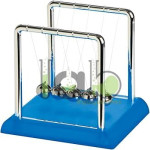
Solar and Wind Power Demonstrator

Solar and Wind Power Demonstrator

Product Code : SCL-PMP-11336

The Solar and Wind Power Demonstrator is a renewable-energy teaching kit used for showing how sunlight and moving air can be converted into electrical energy. It is intended for schools, colleges, STEM laboratories, science clubs and technical institutes that need a visible platform for comparing solar, wind and combined power generation.

Product Description

The demonstrator combines a photovoltaic source with a small wind-driven generator or equivalent turbine assembly. The solar section converts incident light into electrical output, while the wind section converts rotor motion into electrical energy. Students can compare the performance of the two renewable sources under changing operating conditions.

The exact solar-panel rating, generator capacity, blade construction, storage arrangement, meters, output terminals and supported loads are not published for this combined model. These details must be confirmed before procurement. The kit fits within the Physics Miscellaneous Products range for renewable-energy and STEM instruction.

Key Features

  • Dual renewable sources: demonstrates solar and wind energy on one educational platform.
  • Visible energy conversion: links sunlight and airflow to measurable electrical output.
  • Comparative experiments: allows learners to compare output under different light and wind conditions.
  • Hybrid-energy learning: introduces the principle of combining complementary energy sources.
  • Practical STEM value: supports observation, measurement, graphing and project-based learning.
  • Reusable demonstration format: suits regular lessons, exhibitions and environmental science projects.
  • Low-voltage operation: intended for supervised educational loads within verified ratings.

Technical Specifications

Specification

Detail

Product type

Hybrid solar and wind renewable-energy demonstrator

Solar source

Photovoltaic panel; rating

Wind source

Turbine or windmill generator assembly; rating

What's Included in the Kit

  • Solar photovoltaic panel or solar module
  • Wind turbine or windmill generator assembly
  • Demonstration base and support structure
  • Electrical load, lamp, motor or indicator
  • Voltmeter, ammeter or measurement module
  • Connecting leads and experiment instructions

Applications / Uses

  • Comparing solar and wind electrical output.
  • Studying the effect of light intensity on photovoltaic generation.
  • Observing how airflow changes turbine speed and output.
  • Demonstrating hybrid renewable-energy operation.
  • Extending wind-energy lessons with the Windmill Model .
  • Comparing renewable systems with the Hydro Power Model and other physics laboratory equipment .

How to Use the Solar and Wind Power Demonstrator

  1. Place the demonstrator on a stable, dry and level surface.
  2. Inspect the solar panel, turbine blades and wiring before use.
  3. Connect the supplied meter or approved low-voltage load.
  4. Expose the solar panel to direct sunlight or an approved light source.
  5. Direct natural airflow or a suitable fan toward the turbine.
  6. Record solar and wind voltage or current separately.
  7. Use the combined mode only if supported by the supplied circuit.
  8. Switch off or disconnect loads before changing the wiring.

Safety note: Keep fingers, loose clothing and hair away from rotating blades. Do not exceed the confirmed electrical rating, short the output, expose meters to rain or use an unapproved high-heat lamp near the solar panel.

Care & Maintenance

  • Clean the solar-panel surface with a soft, dry cloth.
  • Inspect blades, bearings, supports and electrical leads before use.
  • Store the model indoors in a dry, dust-controlled location.
  • Do not bend the panel, force the rotor or place loads on the blades.

Why Choose Lab Equipments Ambala

Lab Equipments Ambala manufactures, supplies and exports scientific and educational laboratory equipment from Ambala, India. Its range includes physics apparatus, renewable-energy models, science kits, mathematics kits and STEM teaching products. The company supplies schools, colleges, universities and institutional projects in domestic and international markets. Buyers can request model-specific ratings, packing information and export documentation before ordering.

Frequently Asked Questions

What does a solar and wind power demonstrator show?

It shows how photovoltaic panels and wind-driven generators convert renewable energy into electrical output.

Can the solar and wind sections work separately?

Separate operation is typical for comparative experiments, but the supplied switching and terminal arrangement must be confirmed.

Does the kit generate usable electricity?

It can generate low-voltage educational output for compatible supplied loads. The exact wattage, voltage and current are [confirm].

Does the demonstrator include energy storage?

Battery or capacitor storage is not verified. Check the approved packing list and circuit diagram before purchase.

Can it be used indoors?

Yes, with an approved light source and fan. Natural sunlight and outdoor airflow generally provide a more direct renewable-energy demonstration.

Is it suitable for school STEM laboratories?

Yes. It supports supervised experiments in renewable energy, electricity, environmental science, data collection and engineering design.

Explore the complete renewable-energy demonstration model range and request the confirmed generation ratings and packing list before procurement.

   
Supply of Solar and Wind Power Demonstrator from to Finland, France, Tanzania, Thailand, Sri Lanka, Congo, Costa Rica, Ivory Coast, Croatia, Cuba, Cyprus, Czech Republic, Denmark, Djibouti, Dominica, Afghanistan, Albania, Algeria, Andorra, Angola, Antigua and Barbuda, Argentina, Armenia, Australia, Austria, Azerbaijan, Bahamas, Bahrain, Bangladesh, Barbados, United Arab Emirates (UAE, Dubai), United Kingdom (London), United States, Uruguay, Uzbekistan, Vanuatu, Belarus, Belgium, Belize, Benin, Bhutan, Bolivia, Bosnia and Herzegovina, Botswana, Brazil, Brunei, Bulgaria, Burkina Faso, Burma Myanmar, East Timor, Ecuador, Egypt, El Salvador, Equatorial Guinea, Eritrea, Estonia, Ethiopia (Addis Ababa), Fiji, Burundi, Cambodia, Cameroon, Canada, Cape Verde, Central African Republic, Chad, Chile, Colombia. Math Teaching Kit suppliers in Luxembourg, Macedonia, Madagascar, Malawi (Lilongwe), Malaysia (Kuala Lumpur), Maldives, Mali, Malta, Marshall Islands, Mauritania, Mexico, Micronesia, Moldova, Monaco, Mongolia, Montenegro, Morocco, Mozambique, Namibia, Comoros, Congo. Math Teaching Kit manufacturers in Dominican Republic, Gabon, Gambia, Georgia, Germany, Ghana, Greece, Grenada, Guatemala, Guinea, Guinea-Bissau, Guyana, Haiti, Honduras, Hungary, Iceland, Indonesia, Iran, Iraq, Niger, Nigeria (Abuja), Norway, Oman, Palau, Panama, Papua New Guinea, Paraguay, Peru, Philippines (Manila), Poland, Ireland, Israel, Italy, Jamaica, Japan, Jordan, Kazakhstan, Kenya (Nairobi), Kiribati, Korea, Kuwait, Kyrgyzstan, Laos, Latvia, Lebanon, Lesotho, Liberia, Liechtenstein, Lithuania, Mauritius, Nauru, Nepal, Netherlands, New Zealand, Nicaragua, Portugal, Qatar, Romania, Russia, Rwanda (Kigali). Math Teaching Kit exportets to Saint Kitts and Nevis, Saint Lucia, Saint Vincent and the Grenadines, Samoa, San Marino, Sao Tome and Principe, Saudi Arabia, Senegal, Serbia, Seychelles, Sierra Leone, Singapore, Slovakia, Slovenia, Solomon Islands, Somalia, South Africa, South Sudan, Spain, Sudan, Suriname, Swaziland, Sweden, Switzerland, Syria, Tajikistan, Togo, Tonga, Trinidad and Tobago, Tunisia, Turkey, Turkmenistan, Tuvalu, Uganda (Kampala), Ukraine, Venezuela, Vietnam, Yemen , Zambia (Lusaka), Zimbabwe

Office Address

Works: Block-10 Naraingarh Chowk Crossing, Baldev Nagar,
Ambala, Haryana 134003,

[email protected]

Follow Us