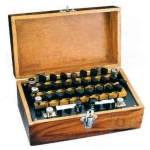
Newton's Color Circle Model

Newton's Color Circle Model

Product Code : SCL-EAE-11359

The Newton's Color Circle Model is an optics demonstration model used for showing how rapidly rotating colour sectors can appear to blend into a lighter composite colour, often used to explain the composition of white light. It is designed for schools, colleges, STEM labs, physics laboratories, optics lessons, and science exhibitions.

Product Description

The Newton's Color Circle Model by Lab Equipments Ambala is an educational physics teaching aid for demonstrating Newton’s colour disc experiment. The model helps students observe how coloured sectors on a circular disc visually combine during rotation, supporting lessons on white light, colour perception, persistence of vision, and additive colour mixing.

This model is suitable for teacher-led demonstrations and supervised student observation in optics and light experiments. Lab Equipments Ambala lists the product as Newton Colour Disc Model with product code SCL-PMP-11140 in its Physics Miscellaneous Products catalogue. Exact disc size, operating method, material, rotation mechanism, dimensions, and supplied accessories should be confirmed from the final product datasheet before publication or procurement.

Key Features

  • Demonstrates Newton’s colour disc experiment in a clear classroom format.
  • Supports teaching of colour mixing, white light composition, persistence of vision, and visual perception.
  • Useful for physics labs, optics lessons, STEM classrooms, and science exhibitions.
  • Helps students observe how coloured sectors visually merge during rapid rotation.
  • Suitable for supervised demonstrations on light, colour, and rotating motion.
  • Provides a simple visual bridge between textbook optics and practical observation.
  • Can be paired with related optics products such as light colour mixing apparatus and primary colour apparatus.

Technical Specifications

Specification

Detail

Product name

Newton's Color Circle Model

Also listed as

Newton Colour Disc Model

Brand

Lab Equipments Ambala

Product category

Physics Demonstration Model / Optics Teaching Aid / STEM Educational Model

Primary keyword

Newton's Color Circle Model

Secondary keywords

Newton Colour Disc Model, Newton color disc, colour mixing model, optics demonstration model, white light composition model, persistence of vision model, physics lab equipment, STEM optics teaching aid

Intended users

Schools, colleges, physics teachers, STEM labs, optics laboratories, science activity centres, and student project groups

Demonstration capacity

Classroom demonstration capacity; exact disc size and operating method to be confirmed

What's Included in the Kit

  • Newton's Color Circle Model main assembly
  • Colour-sector disc or Newton colour disc
  • Handle, spindle, pulley, motor, or rotation mechanism
  • Stand, base, holder, or mounting frame
  • Connecting leads or power input section, if motorized
  • Experiment guide, observation sheet, or user manual
  • Storage box or packing case

Applications / Uses

  • Demonstrating Newton’s colour disc experiment in school and college physics labs.
  • Teaching how coloured sectors can visually blend during rapid rotation.
  • Explaining colour perception, persistence of vision, and the composition of white light.
  • Supporting STEM lessons on light, optics, colour, and rotational motion.
  • Using as a science exhibition model for visual explanation of colour mixing.
  • Helping students compare stationary colour sectors with the blended appearance during rotation.

How to Use the Newton's Color Circle Model

  1. Place the Newton's Color Circle Model on a clean, stable, and well-lit laboratory table.
  2. Check that the colour disc, stand, spindle, handle, or motor arrangement is secure.
  3. Show students the coloured sectors on the stationary disc before rotation.
  4. Rotate the disc using the approved hand, pulley, or motorized mechanism.
  5. Ask students to observe how the separate colours appear to merge at higher speed.
  6. Compare the rotating appearance with the stationary disc to explain visual colour blending.
  7. Discuss how the experiment relates to white light composition, colour perception, and persistence of vision.
  8. Stop the disc fully before touching, removing, or changing the model setup.

Use the model only under teacher supervision. Keep fingers, loose clothing, hair, and wires away from the rotating disc, and do not operate a motorized version if the disc is cracked, loose, or unbalanced.

Care & Maintenance

  • Wipe the colour disc, stand, spindle, and base with a soft, dry cloth after use.
  • Store the disc flat or in its packing case to prevent bending, fading, or surface scratching.
  • Keep the model away from moisture, dust, heat, and direct impact.
  • Inspect the disc mounting, rotation mechanism, stand, and fasteners before every demonstration.

Why Choose Lab Equipments Ambala

Lab Equipments Ambala lists Newton Colour Disc Model with product code SCL-PMP-11140 in its Physics Miscellaneous Products catalogue. The company manufactures and supplies educational laboratory equipment, scientific laboratory instruments, science kits, mathematics kits, didactic models, and STEM learning products for institutional buyers. Its catalogue includes physics lab equipment, optics teaching aids, electrical and electronics products, laboratory instruments, NCERT kits, and educational demonstration models. Buyers should request the final datasheet, component list, warranty terms, and compliance documents before bulk orders, tenders, or institutional procurement.

Explore related categories such as educational laboratory equipmentphysics lab equipmentphysics miscellaneous products, and Electric Motor Model.

Frequently Asked Questions

What is Newton's Color Circle Model used for?

Newton's Color Circle Model is used to demonstrate colour mixing and the visual blending of coloured sectors during rapid rotation. It helps students understand white light composition, colour perception, and persistence of vision.

How does Newton's Color Circle Model work?

The model works by rotating a disc divided into coloured sectors. When the disc spins fast enough, the colours visually blend because the eye retains images briefly during continuous motion.

Is this model suitable for school physics labs?

Yes, the model is suitable for school physics labs, college laboratories, STEM classrooms, optics lessons, and science exhibitions when used under teacher supervision.

Does the rotating disc become perfectly white?

Not always. The blended colour depends on the sector colours, pigment quality, lighting, rotation speed, disc balance, and viewing conditions, so the disc may appear off-white or light grey instead of pure white.

What concepts can students learn from this model?

Students can learn colour mixing, white light composition, persistence of vision, additive colour perception, rotational motion, and the difference between stationary and rotating visual effects.

What material is the Newton's Color Circle Model made of?

The material was not verified from public product data. Confirm the disc material, stand construction, spindle or motor arrangement, base material, and finish from Lab Equipments Ambala before publishing final specifications.

For more optics and physics demonstration models, visit the physics miscellaneous products category by Lab Equipments Ambala.

Suggested image ALT text: Newton's Color Circle Model for classroom colour mixing and white light composition demonstration by Lab Equipments Ambala.

   
Supply of Newton's Color Circle Model from to Finland, France, Tanzania, Thailand, Sri Lanka, Congo, Costa Rica, Ivory Coast, Croatia, Cuba, Cyprus, Czech Republic, Denmark, Djibouti, Dominica, Afghanistan, Albania, Algeria, Andorra, Angola, Antigua and Barbuda, Argentina, Armenia, Australia, Austria, Azerbaijan, Bahamas, Bahrain, Bangladesh, Barbados, United Arab Emirates (UAE, Dubai), United Kingdom (London), United States, Uruguay, Uzbekistan, Vanuatu, Belarus, Belgium, Belize, Benin, Bhutan, Bolivia, Bosnia and Herzegovina, Botswana, Brazil, Brunei, Bulgaria, Burkina Faso, Burma Myanmar, East Timor, Ecuador, Egypt, El Salvador, Equatorial Guinea, Eritrea, Estonia, Ethiopia (Addis Ababa), Fiji, Burundi, Cambodia, Cameroon, Canada, Cape Verde, Central African Republic, Chad, Chile, Colombia. Math Teaching Kit suppliers in Luxembourg, Macedonia, Madagascar, Malawi (Lilongwe), Malaysia (Kuala Lumpur), Maldives, Mali, Malta, Marshall Islands, Mauritania, Mexico, Micronesia, Moldova, Monaco, Mongolia, Montenegro, Morocco, Mozambique, Namibia, Comoros, Congo. Math Teaching Kit manufacturers in Dominican Republic, Gabon, Gambia, Georgia, Germany, Ghana, Greece, Grenada, Guatemala, Guinea, Guinea-Bissau, Guyana, Haiti, Honduras, Hungary, Iceland, Indonesia, Iran, Iraq, Niger, Nigeria (Abuja), Norway, Oman, Palau, Panama, Papua New Guinea, Paraguay, Peru, Philippines (Manila), Poland, Ireland, Israel, Italy, Jamaica, Japan, Jordan, Kazakhstan, Kenya (Nairobi), Kiribati, Korea, Kuwait, Kyrgyzstan, Laos, Latvia, Lebanon, Lesotho, Liberia, Liechtenstein, Lithuania, Mauritius, Nauru, Nepal, Netherlands, New Zealand, Nicaragua, Portugal, Qatar, Romania, Russia, Rwanda (Kigali). Math Teaching Kit exportets to Saint Kitts and Nevis, Saint Lucia, Saint Vincent and the Grenadines, Samoa, San Marino, Sao Tome and Principe, Saudi Arabia, Senegal, Serbia, Seychelles, Sierra Leone, Singapore, Slovakia, Slovenia, Solomon Islands, Somalia, South Africa, South Sudan, Spain, Sudan, Suriname, Swaziland, Sweden, Switzerland, Syria, Tajikistan, Togo, Tonga, Trinidad and Tobago, Tunisia, Turkey, Turkmenistan, Tuvalu, Uganda (Kampala), Ukraine, Venezuela, Vietnam, Yemen , Zambia (Lusaka), Zimbabwe

Office Address

Works: Block-10 Naraingarh Chowk Crossing, Baldev Nagar,
Ambala, Haryana 134003,

[email protected]

Follow Us