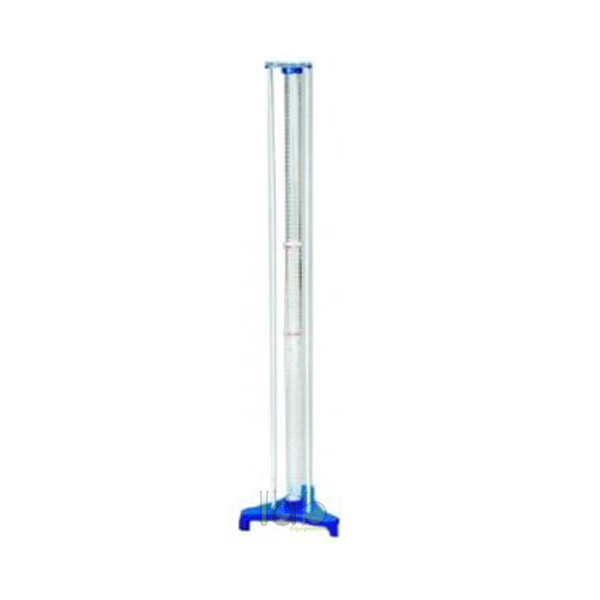
Quick Answer: Viscosity Apparatus Stokes Method is a borosilicate glass tube, one metre long, held vertically by clamps between two upright bars on a heavy cast iron base. It comes with 6 steel balls of different diameters and two rubber band index marks.
Last updated: October 2026
Key Features
Borosilicate glass tube, one metre long, standing vertically
Clamped between two upright bars on a heavy cast iron base
Rubber cork without holes at the lower end
Rubber cork with a funnel at the upper end
Two rubber band index marks and 6 steel balls of different diameters
Supplied without lead shot
Technical Specifications
Specification
Value
Tube
Borosilicate glass, one metre long
Support
Two upright bars with clamps
Base
Heavy cast iron
Lower end
Rubber cork without holes
Upper end
Rubber cork with funnel
Index marks
Two rubber bands
Balls
6 steel balls of different diameters
Not included
Lead shot
About This Product
Among the Elasticity And Surface Tension apparatus, this is the set-up for finding viscosity by the Stokes method, with a funnel in the upper cork for introducing the steel balls and two rubber band index marks along the tube. The tube is open at both ends, closed at the bottom by a plain rubber cork, and it stands firmly upright on the cast iron base.
Frequently Asked Questions
Q1. How many steel balls are supplied with the Stokes method apparatus? Six steel balls of different diameters are supplied, together with two rubber band index marks. Lead shot is not included.
Q2. How is the glass tube held? The one-metre borosilicate glass tube stands vertically between two upright bars, held by clamps on a heavy cast iron base.
Lab Equipments Ambala packs and ships export orders for buyers in Guinea-Bissau, Malta and Slovenia.



 (1).png)


.jpg)
